


Merle Randlepp
Agile Coach
Merle Randlepp
Agile Coach
Jira and 8 other free project management software

Project management software suitable for agile development
This time I will talk more about project management software for agile development – I have selected 9 software that are popular in the world and also have a free version, some poorer, some more generous:
- Jira – Market Leader
- Rally – for large companies
- Pivotal Tracker – well thought out
- Asana – simple and convenient
- GitLab – fast-growing freeware
- Trello – also suitable for business people
- GitScrum – a new awesome player
- Miro – more than just a whiteboard
- ZenHub – Shortcut to GitHub
- Other options
There are thousands of tools that support agile software development, and it is important to make a wise choice. On the one hand, it must be ensured that the software does not remain a so-called narrow shoe and does not start inhibiting the agile mindset and culture. On the other hand, it is important that the software does not overwhelm users with irrelevant functionality that the team never plans to use in their work.
Before delving into the topic, it is good to recall the principle from the Agile Software Development Manifesto:
“We have started to value people and the communication between them more than processes and development tools.”
In other words, in an agile mindset, people are always more important than tools.
The selection of project management software suitable for agile development is wide and rich, and there are also free versions for small teams.
Minimum expectations for agile project management software could be:
- A board that supports the workflow, such as a Scrum or Kanban board
- Convenient management of work, including prioritization, evaluation, voting options
- Support for team cooperation and communication, including notifications, feedback
- Roadmap
- Graphs and reports for evaluating progress (velocity, burndown , etc.)
- necessary integrations – with the code repository, communication software, file platform, etc.
Jira – Market Leader
Atlassian Jira is considered the most common project management software in the world based on the number of users. Jira is also the most common in Estonia. Jira supports all agile development methodologies, including Scrum and Kanban, and you can also freely define a project workflow for another development methodology. Jira is often used in conjunction with Confluence software, which is designed to build wiki-style sites and store documentation, manuals, etc.
In addition to its wide functionality, Jira’s strength is its integrations with thousands of applications, which are essential for creating an efficient and comprehensive work environment. The disadvantages of Jira are considered to be the relatively high price and confusing user interface. Jira is constantly working on the latter, and an experienced master user can configure the entire standard user interface to suit their team.
Jira is suitable for both small teams and large corporations, both development and maintenance projects. Today, Jira is free for up to 10 users, including an unlimited number of projects, all basic functionality, and integrations. Jira is often referred to as the de facto standard for software development, but at the same time, it is not a real monopoly – there are enough other big players on the market (e.g. Rally, Trello) and completely new solutions are constantly being added.
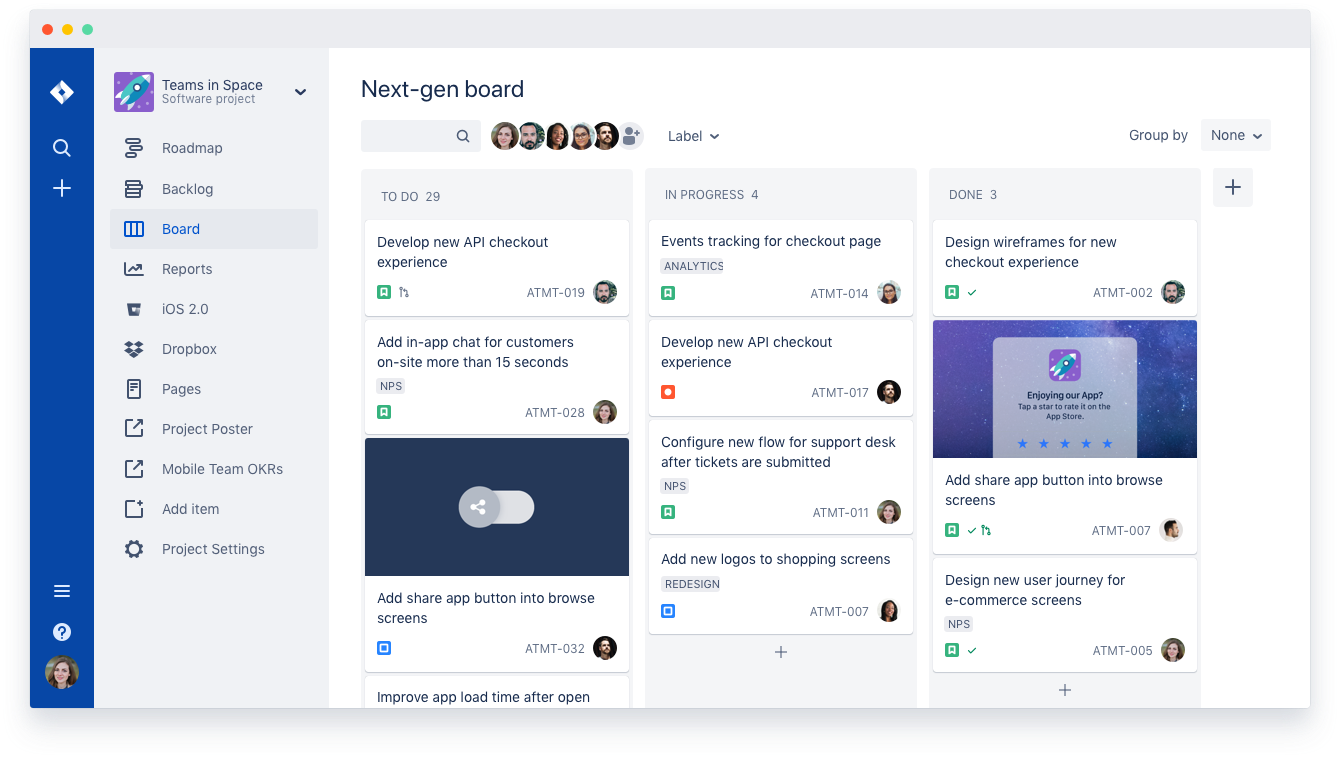
Jira Sprint Board
Rally – for large companies
Rally (formerly CA Agile Central) is a software with a long history and has defined itself as suitable for large corporations, being extremely functional and competing with Jira in the market. Previously, Rally was free for up to 10 users, but today’s pricing policy has become non-transparent and limited. The rally is free for up to 50 users in 21 countries, and for some reason Estonia is not one of those countries.
Due to the high licensing fees, Rally is not the most suitable option for a small business.
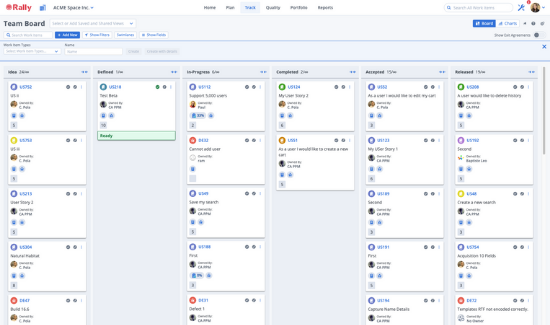
Rally Board
Pivotal Tracker – well thought out
Like the previous ones, Pivotal Tracker is a widely used software with a lot of features. The minimum requirements are more than met and the agile development process is well supported. The software is free for up to five users and five projects, which is not much, while for smaller teams, the price of the Startup package is relatively reasonable ($10/month for 10 users, unlimited projects).
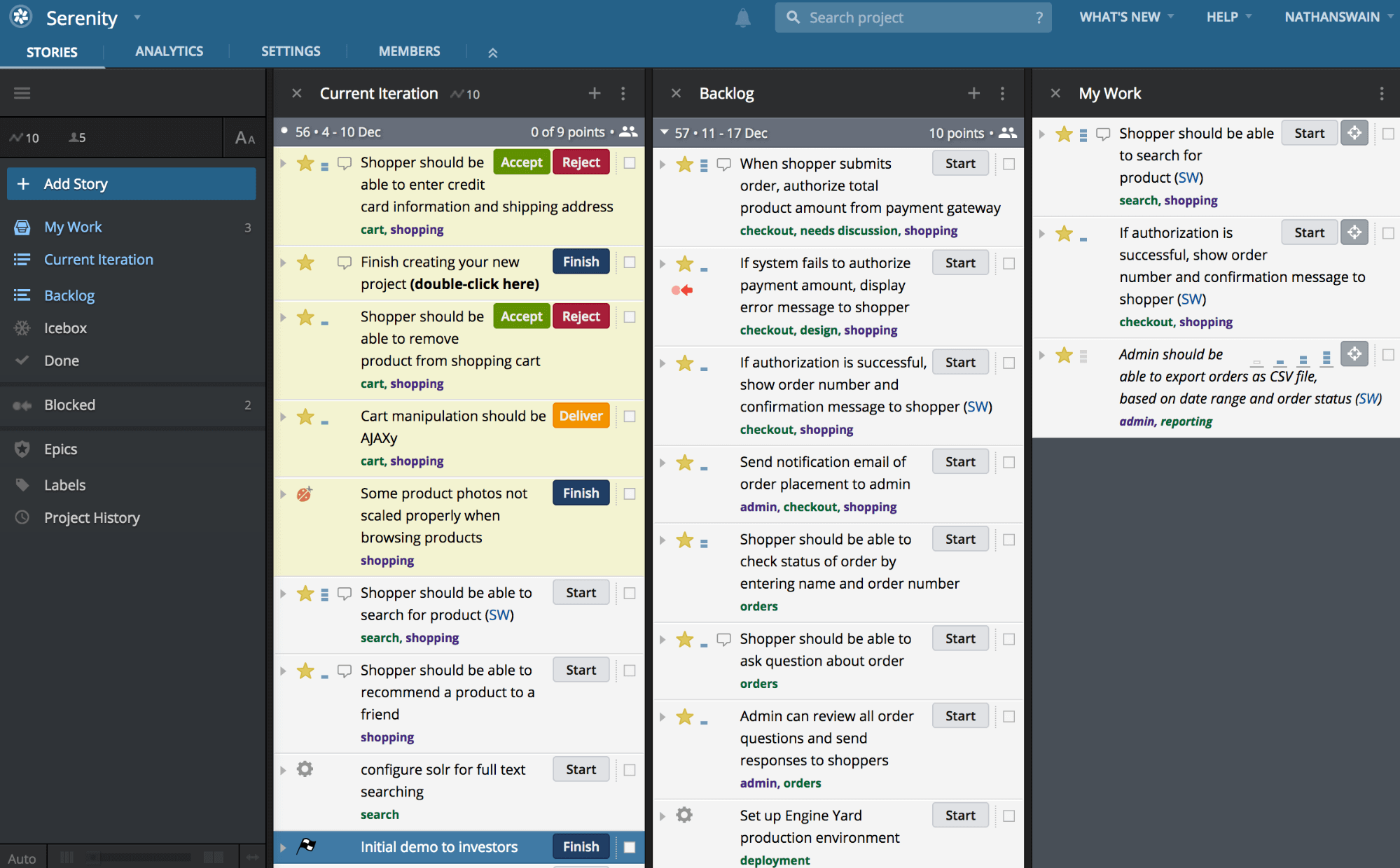
Pivotal Tracker Board
Asana – simple and convenient
Asana has grown from a simple task management software to an environment that can also be used for agile development with some concessions. Asana has a modern and intuitive user interface and is easy to use. Asana includes convenient roadmaps, but by default, some of the features that are important for an agile team are missing, such as rating, voting, agile progress graphs, and reports. Some of them can be added with the help of external application integrations, but this in turn increases the cost of the monthly fee.
Asana is free for up to 15 users and is a perfectly reasonable choice for smaller teams.
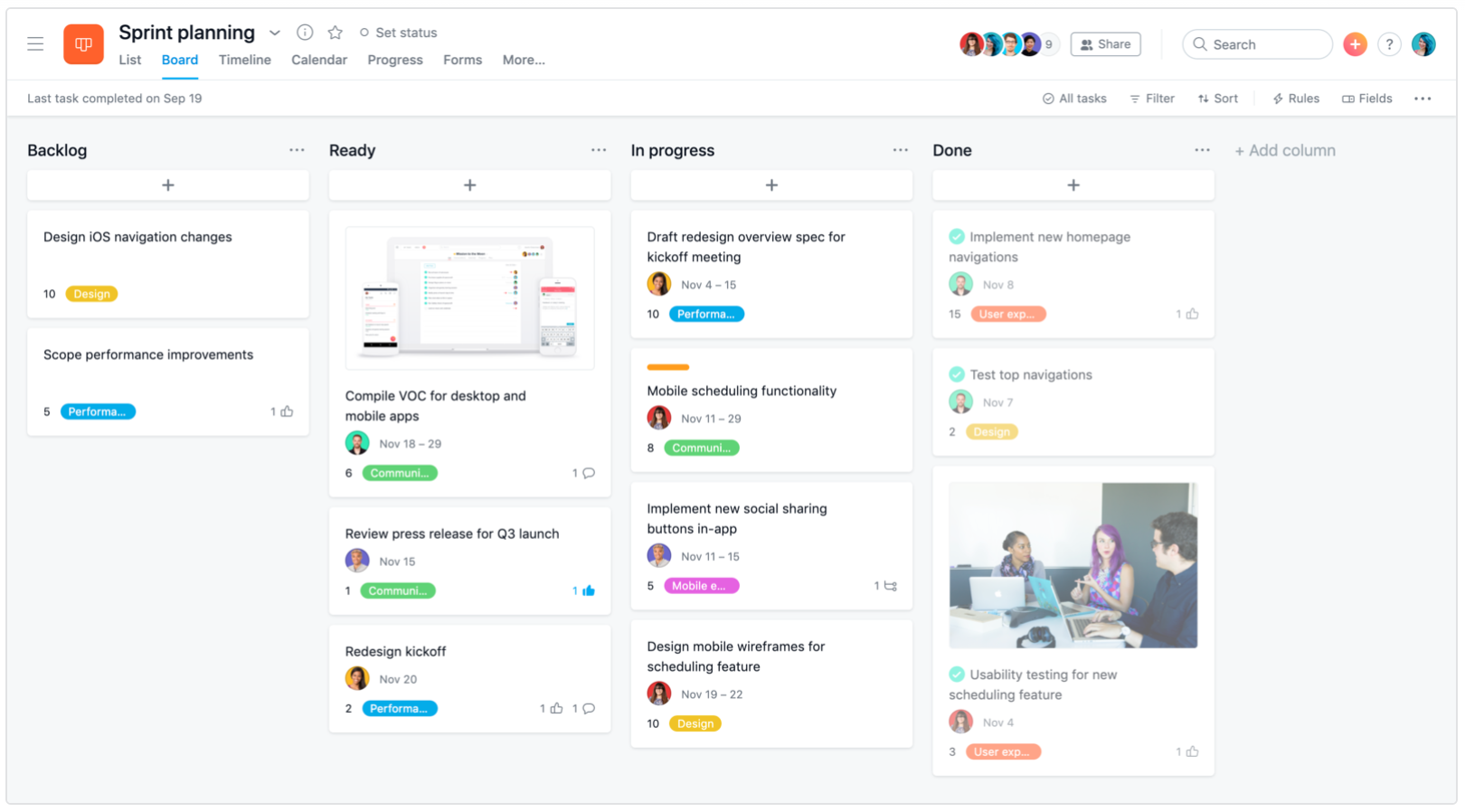
Asana Board
GitLab – fast-growing freeware
GitLab is a popular and powerful environment for DevOps teams, but it is also well suited for agile software development projects. Gitlab is freeware and has more than 2000 volunteer developers worldwide. GitLab’s strength lies in its comprehensive integrations to achieve a smooth supply chain, and it is particularly suitable for Kanban developments, where releases take place very frequently. The free version of GitLab has a very generous scope and is suitable as a free environment for many development projects. The pricing of paid packages is also affordable and supports the needs of both small businesses and large corporations.
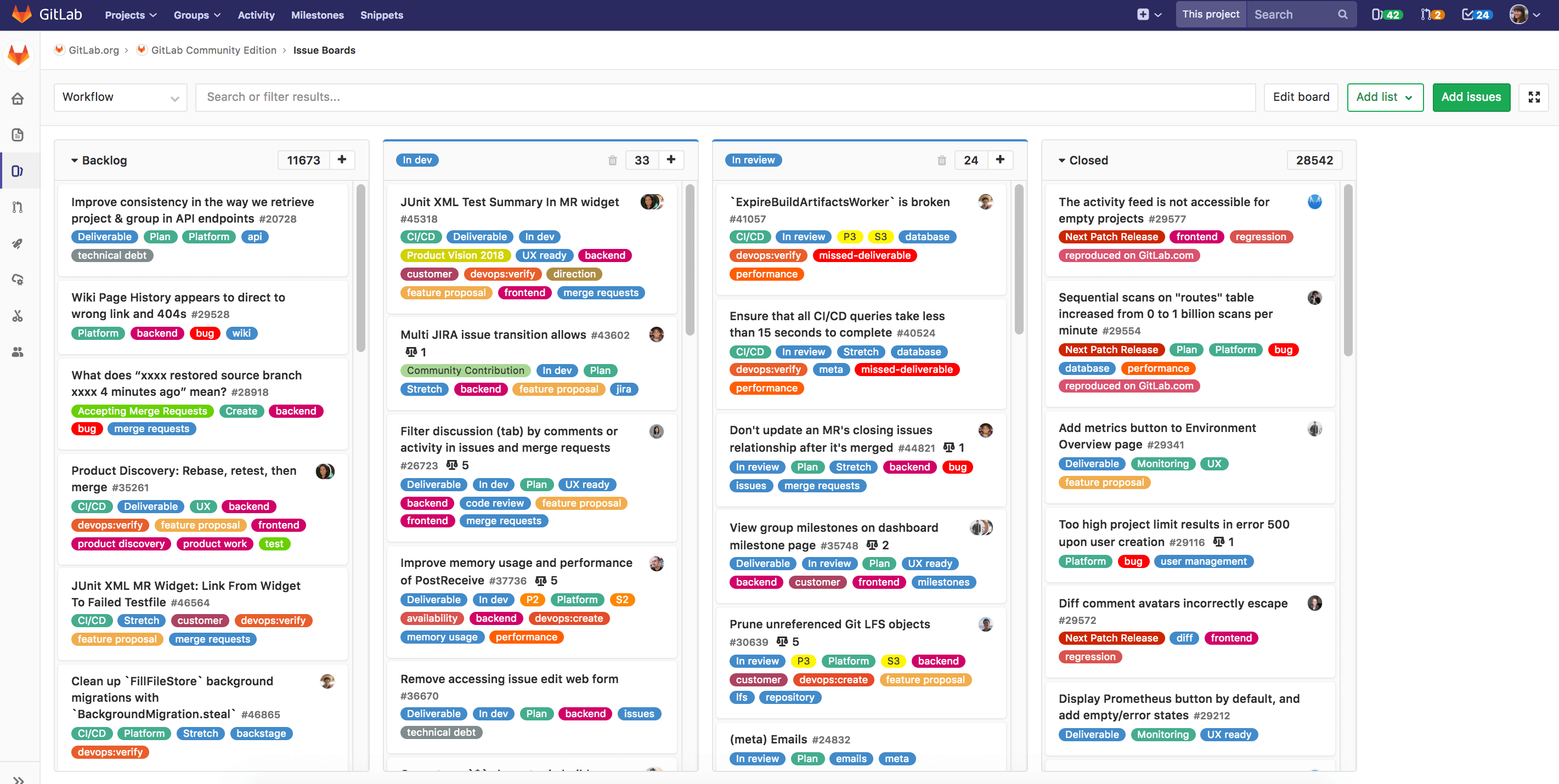
GitLab Board
Trello – also suitable for business people
Trello , like Asana, has grown out of task management software, being very widespread in the world today for both personal and professional use. Due to its convenient and open structure, Trello is especially suitable for companies as a collaboration platform for different business teams (e.g. marketing, human resources, etc.), and it can also be successfully used for simpler development projects. Granted, Trello lacks some important features, such as real-time agile graphs to track progress.
Trello’s free plan will probably be too small for a demanding agile development team due to functionality limitations, but it’s enough for freelancers and project managers in other fields, with 10 free boards. Trello is well suited for small businesses for job management, and the paid plans are also affordable.
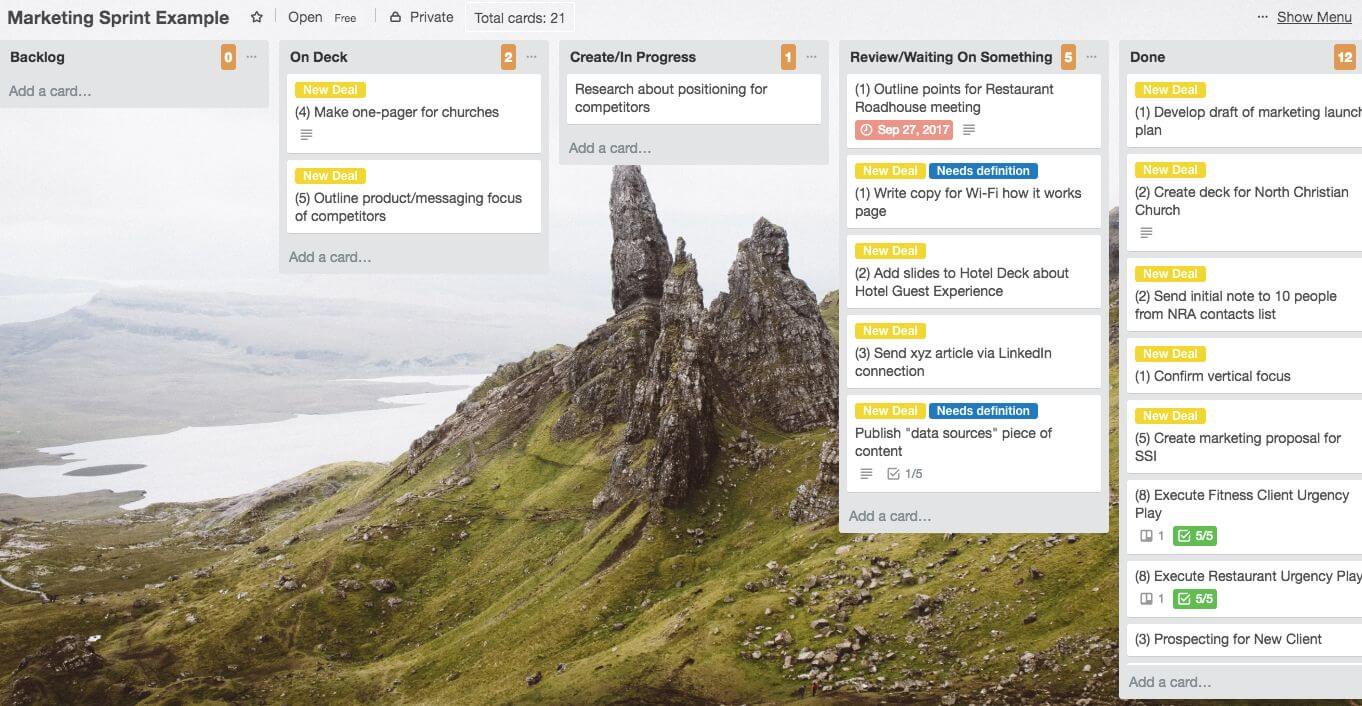
Trello Board
GitScrum – a new awesome player
GitScrum is an impressive new start-up that is definitely worth trying. The structure of GitScrum is entirely based on agile principles and is suitable for both Scrum and Kanban methods . GitScrum is free for up to 3 users, and the paid plans are affordable for small businesses ($14/month for 5 users).
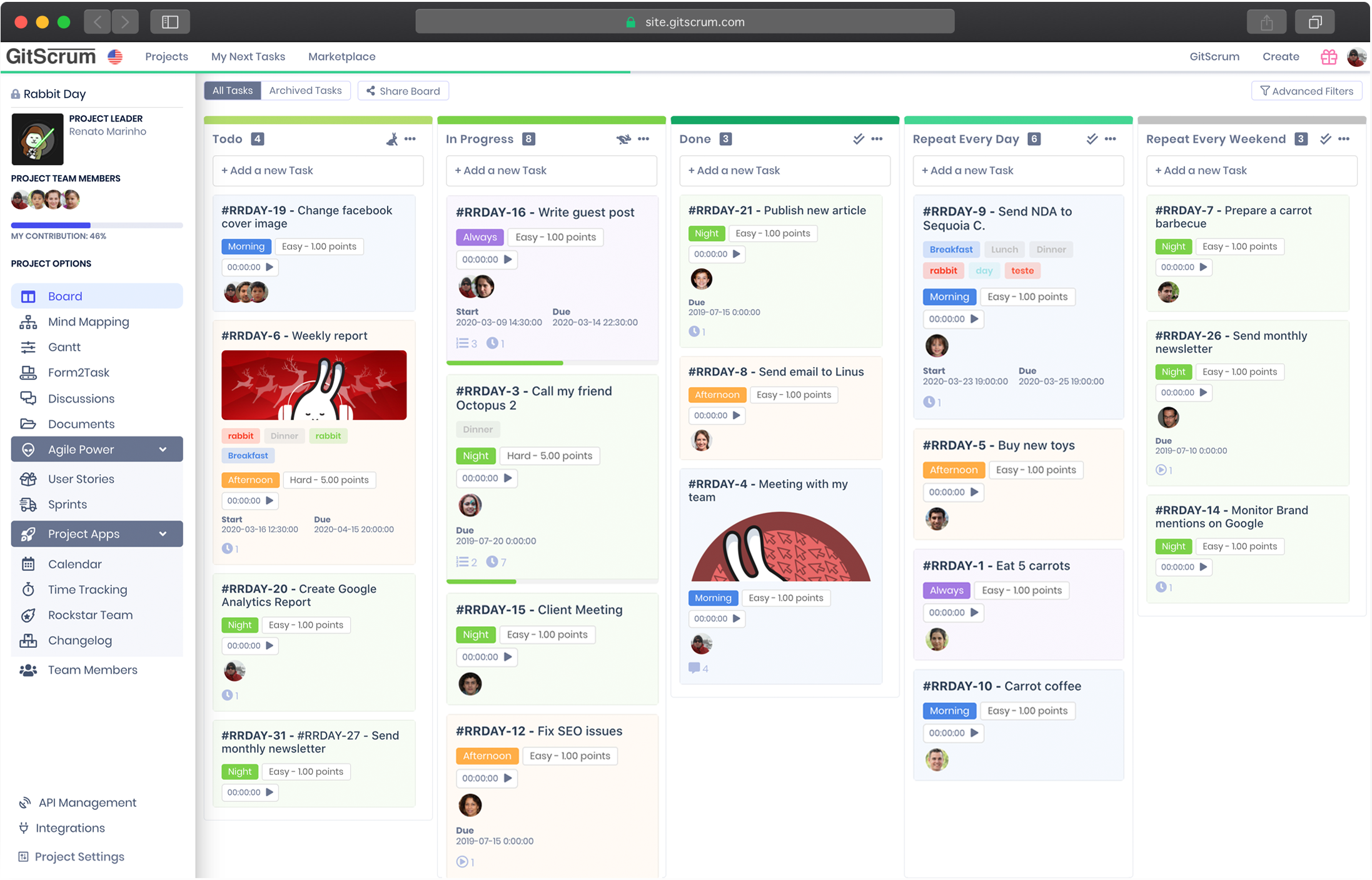
GitScrum Board
Miro – more than just a whiteboard
Miro is an extremely popular visual collaboration platform (whiteboarding) that can be used for a wide variety of purposes and I have written about it before. It should be taken into account that the main focus is on visualization in Miro, and the only functionality of the development method is a very thin Kanban Framework layer. In case the development team uses another project management software (e.g. Jira), Miro can also be used for various project meetings (retrospectives, brainstorming sessions, planning, etc.), because Miro is extremely simple and has an excellent user interface, which is also well suited for remote work.
Miro has a large number of agile development design templates, see https://miro.com/templates/agile/, built-in Kanban workflow, and there are integrations with Jira and Asana.
The free plan has unlimited users and 3 boards, the paid plans are perfectly affordable for small businesses ($40/month for 5 users).
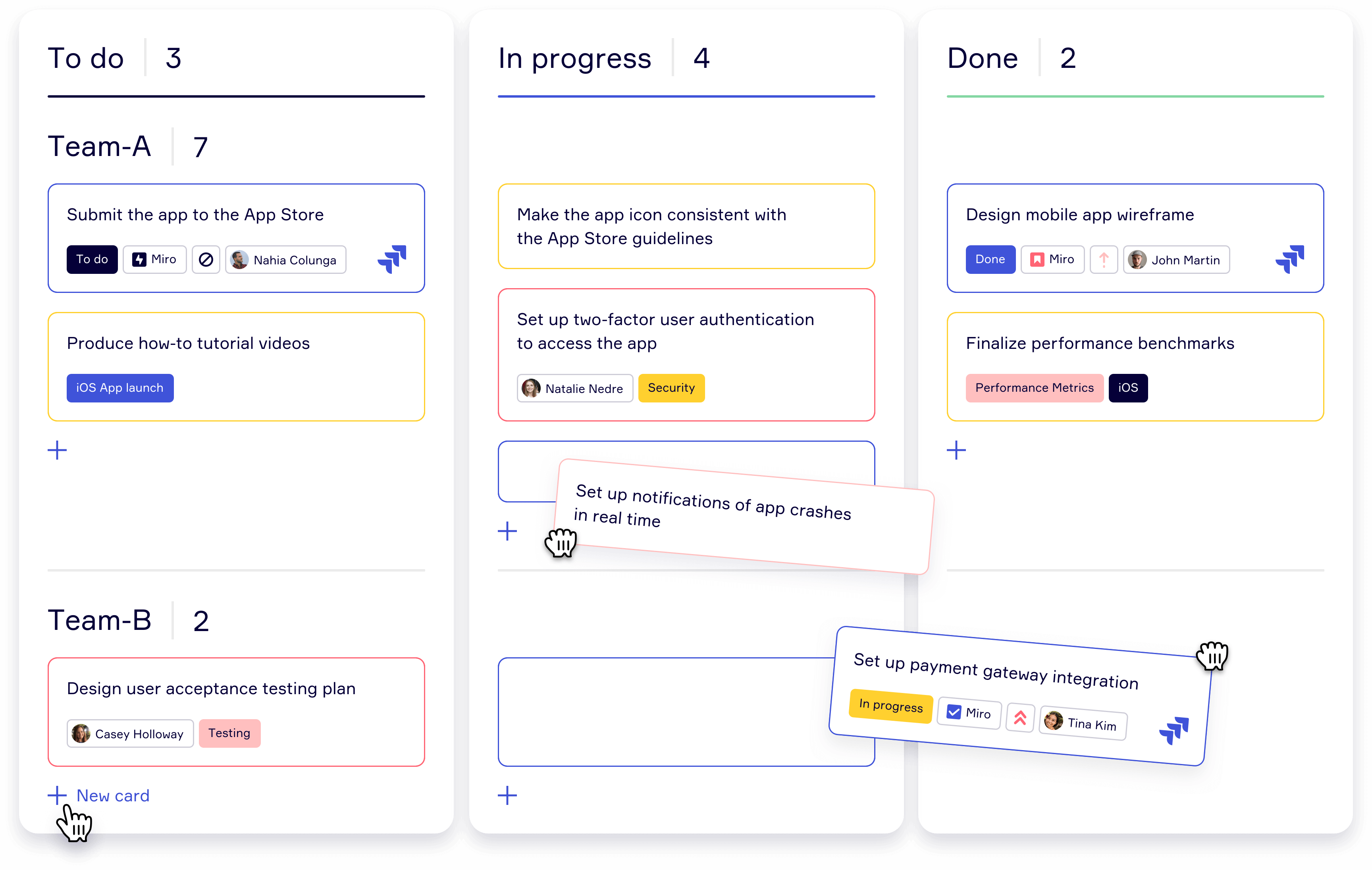
Miro Kanban Board
ZenHub – Shortcut to GitHub
ZenHub is distinguished from other software by being built directly into GitHub (code repository software). ZenHub includes most of the features needed for development and plenty of integrations, while still having significantly less functionality compared to the market leaders. ZenHub only has a free version for public, personal, or education-related code repositories, while paid plans can be too expensive for a small business, especially when compared to alternatives.
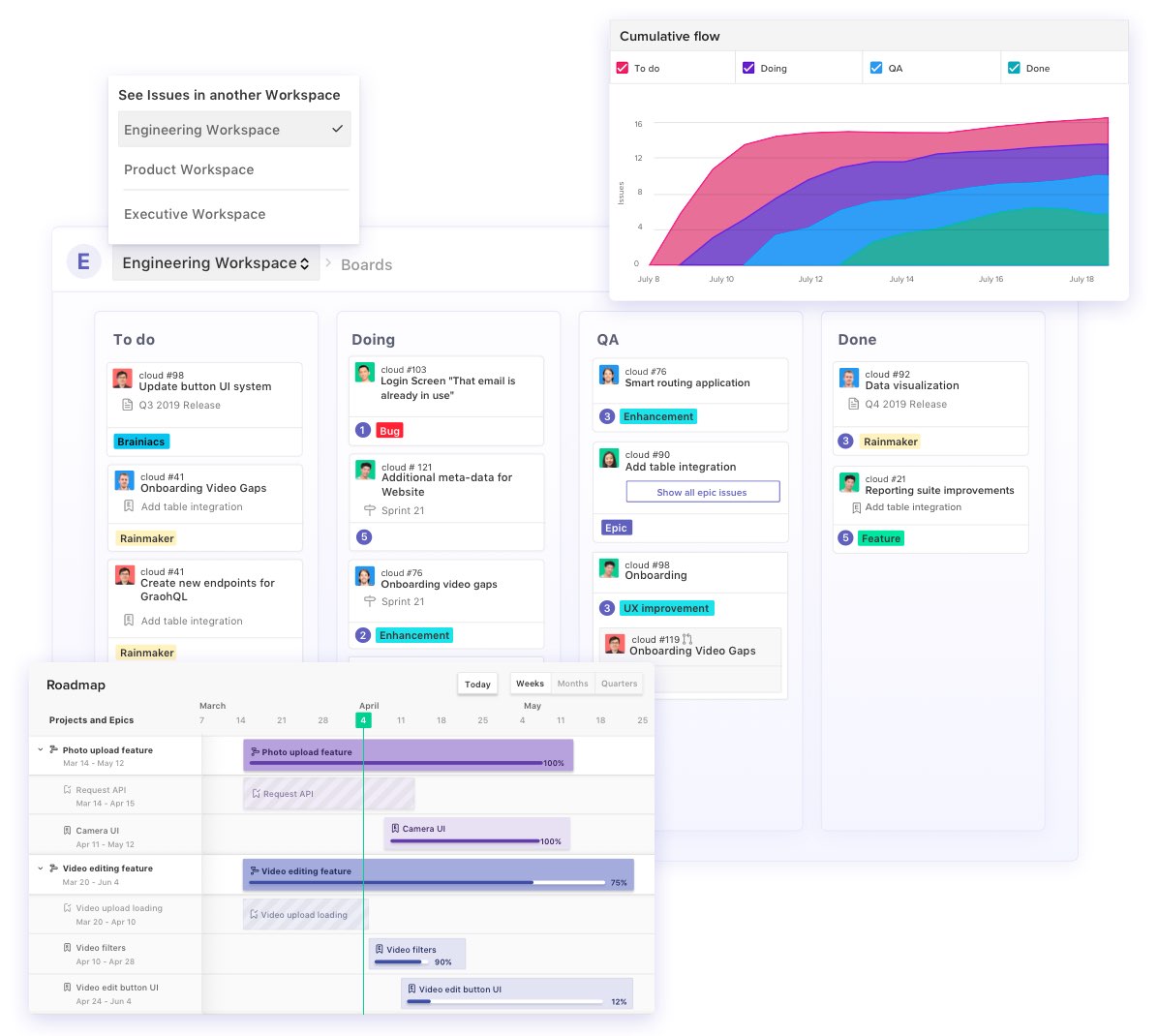
ZenHub Board
Other options
There are many different project management software for agile development, of which Redmine, Axosoft, Perforce, Kanbanchi, Airtable, Basecamp, ClickUp, MeisterTask, Samepage, FogBugz, VersionOne (for corporations), Azure DevOps, and many others are worth mentioning
PS Since the prices of products change quite often, you can always find the latest price information on the product’s own website.
The article was first published in Äripäev’s IT Management Information Asset in May 2020.
Related topics

IT Manager Metrics: Framework + Lead Time vs Cycle Time (1/3)
A clear framework for measuring the IT team and core speed metrics from a single page: what is the difference between Lead Time and Cycle Time, how to set a start-end rule, and when to use each.
Agility posters
Posters are very useful tools for conveying the message and there is great power in visualisation. Before the corona time, I used them on the walls of meeting rooms, but now in the virtual Zoom era, I used them in the Miro environment. Here you will find some of my agile posters and some favorites from other authors. Everything is meant to be used freely!
Free whiteboard tools
If you organize virtual meetings with your team and occasionally need to hold joint brainstorming sessions, participatory workshops, retrospectives, etc., then there are excellent whiteboard software to replace the physical whiteboard space.


Every new contact is an opportunity for new and exciting collaboration - write or call me, and let's discuss how I can help you.
The first consultation and proposal are always free.