


Merle Randlepp
Agile Coach
Merle Randlepp
Agile Coach

Photo by Expect Best
The unforeseen events of 2020 have shown how important it is to adapt quickly to the changing environment and take an agile approach. Agile trends in 2021 reflect the global economic situation and adaptation to the new needs of a changed world. Below, I will highlight the TOP5 agile trends that we will see more and more in the past and in the coming years.
Trend No. 1: Agile practices are spreading across the organization, scaling is growing
Companies that have been using agile practices in software development projects for a long time see the true potential of agile thinking and increasingly want to implement agile principles throughout the organization.
Agile development teams have become the norm over the past 20 years and no longer surprise anyone. Now, progressive companies are moving step by step towards agile processes in all areas of business. Often, changes start with the human resources (HR), business operations, sales department, and management level. Agile organizations have a great competitive advantage in today’s rapidly changing market, and concepts such as “business agility” and “organizational agility” will become part of our everyday lives in the near future.
The agile trend is also supported by changes to large scalable agile frameworks: in January 2020, a new major component called “Business Agility” was created in SAFe version 5.0 (Scaled Agile Framework). Similar changes are constantly appearing in other scalable agile frameworks, the adoption of which among organizations is constantly increasing.
Scaling agile in a large, complex organizational structure is not an easy task, there are many false starts and failures, but the agile mindset is here to stay.
Trend No. 2: We see more and more agencies offering “Agile transformation” services.
This agile trend is strongly related to the previous trend of the spread of agile practices, because where there is demand, there is also supply. While in the past, agile transformation was mainly talked about by digital agencies, several other consulting companies have now added a similar service to their service portfolios. Managing an organization’s agile process changes requires in-depth expertise and experience and cannot be done simply by using “common sense”.
It is important to understand the true nature of agile values and principles , and not just to mechanically copy practices that will not lead to success.
Every organization is different and all agile challenges need a tailor-made solution that suits the team and situation exactly.
To ensure that the service offered by the agency does not remain at the level of planning and talking, you should be careful and choose your cooperation partner carefully. All activities must be clearly targeted and the success of the changes at the end of the project must be measurable.

Photo by Feng Zou
Trend No. 3: Agile teams are increasingly dispersed and working remotely
Before the COVID-19 global pandemic of 2020, most international development teams were already dispersed and worked mainly via video and remote work. However, local Estonian teams regularly went to the office and also met face-to-face, which strongly supported the use of agile practices – communication was frequent and effective. Now, after a year, we are all dispersed within Estonia and see each other mainly through screens.
For agile teams, this is a big challenge, because you have to consciously overcome the psychological barriers that quickly become apparent in the case of virtual teams and strive for the same team dynamics that you were used to in the office.
Scrum Masters and Agile Coaches working in distributed teams need to pay a lot of attention to this aspect and help the team overcome distancing barriers.
Trend No. 4: Agile skills are becoming essential in DevOps teams
The demand for DevOps continues to increase globally, and so do the expectations for their skills. The Enterprise DevOps Skills Report 2020, published by the DevOps Institute, clearly states that the skills of agile frameworks in the selection of employees are important for 89% of companies. Also, the use of agile frameworks is constantly on the rise, with 81% of companies using them.
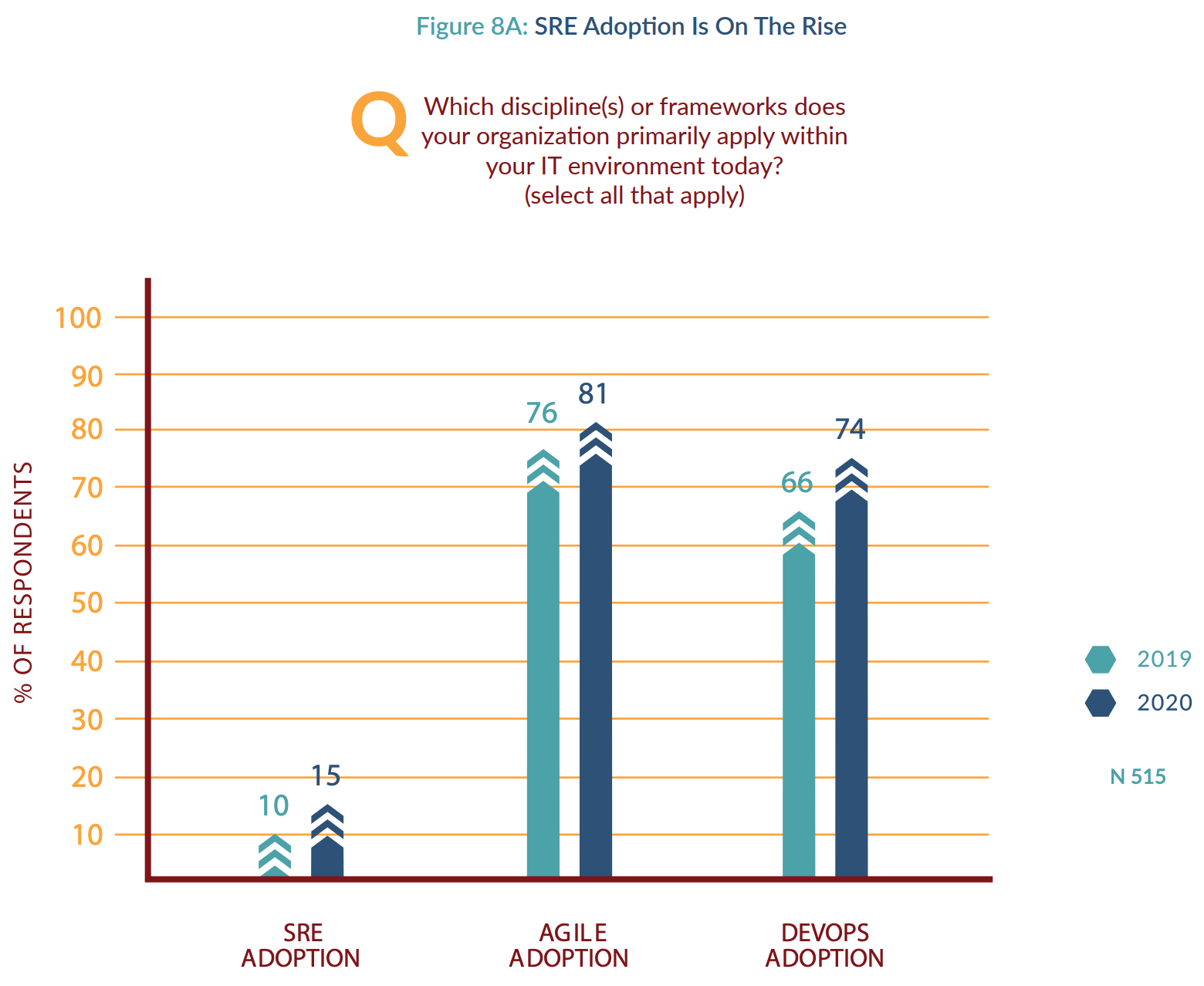
Photo by DevOps Institute
Trend No. 5: Demand for Agile Coaching and Agile Training is Increasing
The increase in demand for Agile Coaches and agile training is logically related to previous agile trends: the growth of agile organizations and remote work. Implementing agile practices requires an Agile Coach to have a full understanding of the organization’s situation and a rich toolbox from which to pick suitable practices. In the case of an Agile Coach, the skills of classical coaching are increasingly important, which, in synergy with the experience of agile methodologies, creates a valuable set for the company.
Just as you can’t become a good Scrum Master in just a year, you can’t become a good Agile Coach in less than 5 years. Even more important than time is a rich range of experience with different teams, practices and challenges. This is also the reason why most well-known Agile Coaches in the world are between the ages of 40 and 60. In Estonia, the circle of Agile Coaches is small and most of them work in large companies or successful startups, but the demand for Agile Coaching service providers is certainly growing at a rapid pace in the local market as well.
Agile Trends – Summary
Over the past year, many companies have realized the need for change and have seriously started creating agile strategies and implementing agile practices. Scaling and implementing agility throughout the organization is a lot of challenges and not an easy task, but if successful, it will bring a great competitive advantage to the company. On the journey to becoming agile, an organization needs Agile Coaches and Scrum Masters who train, mentor, coach and help lead the change processes effectively and in the right direction.
Collaboration and communication continue to be the most important keywords, and the change in mindset from a “this-is-only-work” attitude to an understanding of “we-create-together-value” involves both new and old generations.
And that’s great.
Related topics
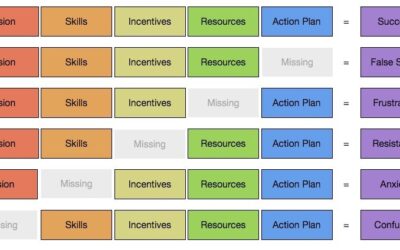
What is the Knoster Model and what is it used for?
The Knoster Model [1] is a simple and powerful tool for those who need to manage important changes – project managers, team leaders, company leaders, etc. The model is useful if you want to understand how people psychologically adapt to change and how they cope with major changes in everyday life.


Every new contact is an opportunity for new and exciting collaboration - write or call me, and let's discuss how I can help you.
The first consultation and proposal are always free.